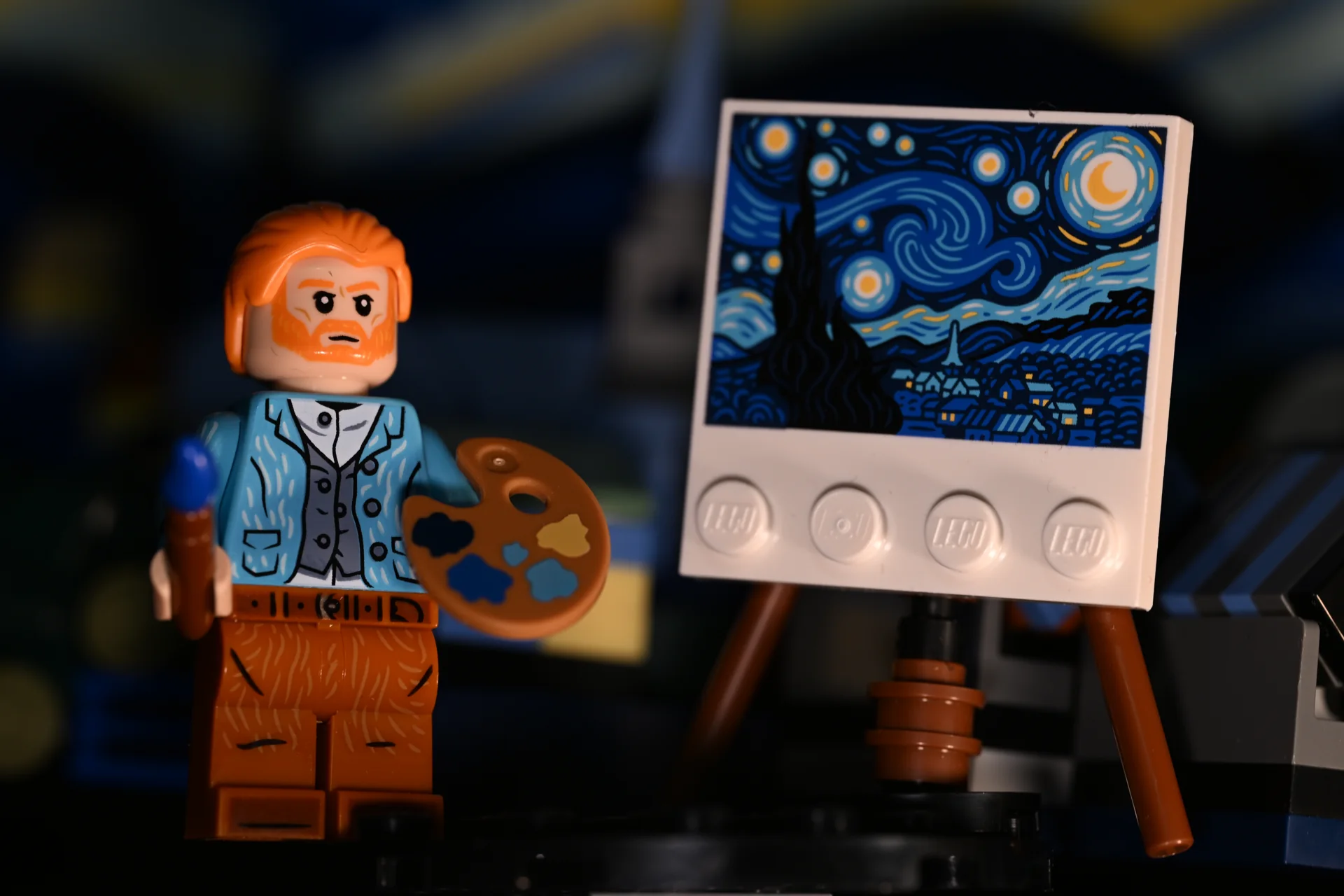
The history of the camera is not one sudden invention. It is a meeting of optics, materials, chemistry and, later, electronics. Projecting an image and keeping an image were separate problems. The small toy painter above is a contemporary PhotoByBrick illustration of looking and making—not a historical artifact.
Before photographs: a room full of light.
The camera obscura projects an inverted view of the world through an opening into a dark space. It could help people observe or draw, but projection alone did not make a permanent photograph. Light-sensitive materials and a way to preserve their response were the next challenge.
The nineteenth century: an image that stays.
Joseph Nicéphore Niépce’s surviving view from his window at Le Gras was made in 1826 or 1827, according to the Harry Ransom Center. Daguerre introduced his daguerreotype process in 1839. These were very different objects from a file on a screen: a daguerreotype is a unique image on a polished, silver-coated copper plate. Other processes made negatives and multiple prints possible. Photography developed along several paths, not one neat straight line.
1888: making the camera more accessible.
Kodak’s 1888 camera helped bring photography to a wider public through a simpler camera and a processing service. The importance was not just a new box. It was a different relationship between the person making the exposure and the complicated work that followed.
1975: a digital turning point.
Kodak engineer Steven Sasson built a digital camera in 1975, a milestone highlighted by the George Eastman Museum. Digital capture eventually changed how images could be reviewed, processed and distributed. It did not remove the old questions: where to stand, what to include, and when to release the shutter.
The history is still in the photograph.
A modern camera can feel immediate, yet its central act is familiar: allow light to form an image, then keep a trace of it. Knowing a little of that history makes the ordinary shutter press feel less ordinary.